



































Supreme Court: California law banning sale of violent video games to kids violated First Amendment

Don't worry kids, the govement can't keep you away from violent video games.
In a 7-2 vote, the U.S. Supreme Court on Monday threw out a Califoia law banning the sale of such games to minors.
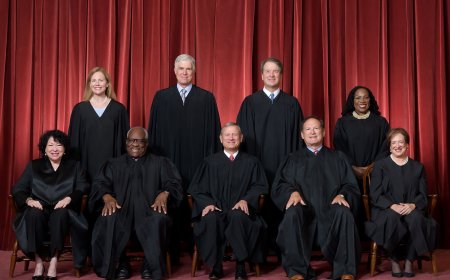
Justice Antonin Scalia, who wrote the majority opinion, said the law \"violated the First Amendment.\"
\"Like the protected books, plays, and movies that preceded them, video games communicate ideas - and even social messages,\" he wrote.
\"Under our Constitution, 'esthetic and moral judgments about art and literature... are for the individual to make, not for the govement to decree,'\" he wrote.
The law signed by former Gov. Aold Schwarzenegger in 2005 would have prohibited the sale or rental of violent games to anyone under 18. Retailers who violated the act would have been fined up to $1,000 for each infraction.
It was only in effect for a few months before being challenged in court by several video game groups, including the Entertainment Software Association. The ban has been on hold since then.

The law would have prevent games such a 'Spatterhouse' from being sold to minors.
\"Courts throughout the country have ruled consistently that content-based regulation of computer and video games is unconstitutional,\" the ESA argued. \"Research shows that the public agrees.\"
The state had argued it had the right to restrict the sale of video games as part of an effort to protect children. The Supreme Court, however, did not agree.
\"No doubt a state possesses legitimate power to protect children from harm,\" Scalia said. \"But that does not include a free-floating power to restrict the ideas to which children may be exposed.\"
Califoia also argued video games are different from other media such as movies and books because they are interactive, \"in that the player participates in the violent action on screen and determines its outcome.\"
The Supreme Court dismissed this claim.
\"Since at least the publication of 'The Adventures of You: Sugarcane Island' in 1969, young readers of choose-your-own-adventure stories have been able to make decisions that determine the plot by following instructions about which page to tu to,\" Scalia said.
Justice Clarence Thomas, who wrote the dissent, argued that \"freedom of speech\" should not be used to give children free access to violent video games.
\"It would be absurd to suggest that such a society understood 'the freedom of speech' to include a right to speak to minors... without going through the minors' parents,\" he said.
What's Your Reaction?
 Like
0
Like
0
 Dislike
0
Dislike
0
 Love
0
Love
0
 Funny
0
Funny
0
 Angry
0
Angry
0
 Sad
0
Sad
0
 Wow
0
Wow
0