

































Iran’s supreme leader killed in major attack by US and Israel

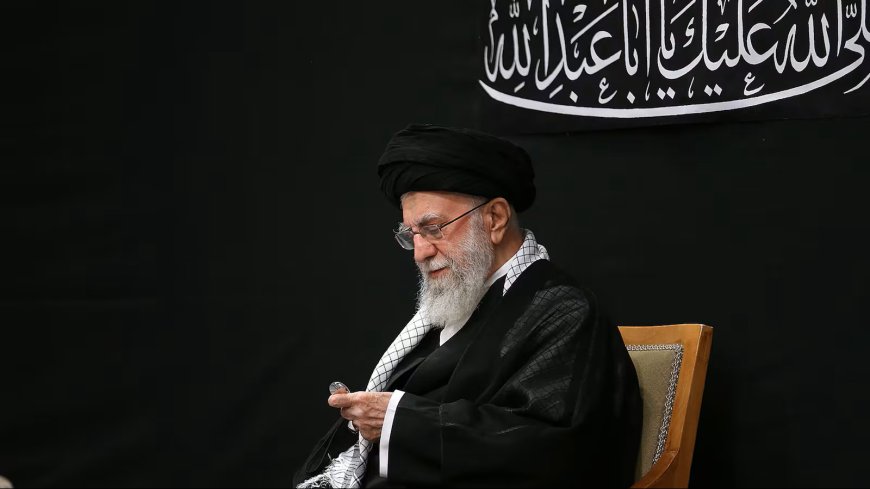
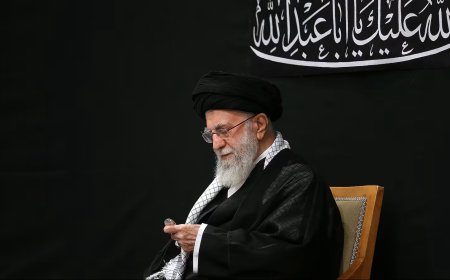
DUBAI, United Arab Emirates — Iranian Supreme Leader Ayatollah Ali Khamenei was killed in a large-scale airstrike carried out by Israel and the United States, Iranian state media confirmed early Sunday, a development that throws the future of the Islamic Republic into uncertainty and heightens the risk of wider regional conflict.
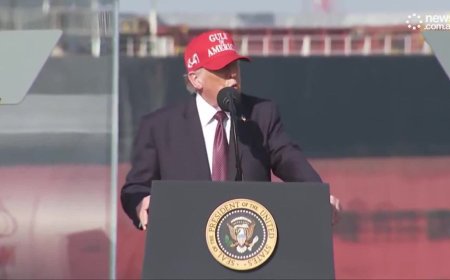
President Donald Trump announced Khamenei’s death hours before the Iranian confirmation, describing it as the Iranian people’s “greatest chance” to “take back” their country.
Iranian state television reported that the 86-year-old leader was killed when an airstrike targeted his compound in central Tehran. Satellite imagery from Airbus indicated extensive damage to the site.
In a statement, state TV said Khamenei died at his office, “standing among the people and at the forefront of his responsibilities,” confronting what officials described as global arrogance.
Trump, writing on social media, called Khamenei “one of the most evil people in history” and said U.S. military operations would continue with “heavy and pinpoint bombing” in the days ahead. The administration has defended the strikes as necessary to prevent Iran from advancing its nuclear capabilities.
Iran’s Cabinet condemned the killing as a “great crime” that “will never go unanswered.” The paramilitary Revolutionary Guard vowed to carry out its “most intense offensive operation” against Israeli and American bases.
The attack marks a dramatic escalation in U.S. involvement in Iran and raises the possibility of retaliatory violence and broader war. It also represents a significant use of force by a president who campaigned on an “America First” platform and pledged to avoid prolonged foreign conflicts.
Khamenei’s death leaves a leadership vacuum. As supreme leader for decades, he held ultimate authority over Iran’s political, military and religious institutions, including the clerical establishment and the Revolutionary Guard. With no publicly designated successor, Iranian authorities moved quickly to form a governing council until a new leader can be selected.
State media also reported that the head of Iran’s Revolutionary Guard and a senior security adviser to Khamenei were killed in the strikes. Maj. Gen. Mohammad Pakpour was named as the Guard’s new commander after the previous leader was killed in fighting last year. Adviser Ali Shamkhani, long a central figure in Iran’s security apparatus, was also reported dead.
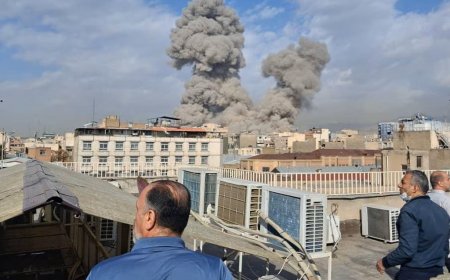
In Tehran, reactions were mixed. Some residents told The Associated Press that people gathered on rooftops, cheering and blowing whistles. Elsewhere, mourners raised black flags at religious sites, including the Imam Reza shrine in Mashhad. The government declared 40 days of mourning and a seven-day national holiday.
The joint U.S.-Israel operation followed months of rising tensions and stalled nuclear negotiations. U.S. officials said the strikes targeted Revolutionary Guard command centers, air defense systems, missile and drone launch sites, and military airfields. Israel said it struck hundreds of sites across Iran.
Iran responded by launching missiles and drones toward Israel and targeting U.S. military installations in Bahrain, Kuwait and Qatar. The Israeli military said many of the incoming missiles were intercepted, though at least one civilian was reported killed in the Tel Aviv area. Iranian officials told the United Nations that hundreds of civilians were killed or wounded in the strikes.
Explosions were reported in multiple Iranian cities, including near government buildings in Tehran. In southern Iran, local officials reported heavy casualties after strikes hit residential areas and public facilities. U.S. Central Command said it was reviewing reports of civilian sites being struck.
The violence reverberated across the region. Flights were disrupted throughout the Middle East. Debris from missile interceptions was reported in several Gulf countries. Saudi Arabia, Bahrain and Kuwait reported attempted or successful strikes on military and civilian sites. Jordan said it intercepted dozens of drones and ballistic missiles.
Global markets are bracing for potential disruption, particularly if Iran moves to threaten commercial shipping through the Strait of Hormuz, a key corridor for global oil supplies.
The latest escalation follows months of heightened U.S. military presence in the region and failed diplomatic efforts to revive constraints on Iran’s nuclear program. While Tehran has insisted it does not seek nuclear weapons, U.S. officials said intelligence indicated renewed capabilities to enrich uranium at high levels.
As the region braces for further retaliation, the long-term consequences of Khamenei’s death — for Iran’s internal stability, its nuclear ambitions and broader Middle East security — remain uncertain.
What's Your Reaction?
 Like
0
Like
0
 Dislike
0
Dislike
0
 Love
0
Love
0
 Funny
0
Funny
0
 Angry
0
Angry
0
 Sad
0
Sad
0
 Wow
0
Wow
0