






























American Pilot Shouts ‘I’m OK’ After Crash-Landing in Kuwaiti Desert Amid Iranian Assault
This is the dramatic moment an American pilot reassured locals she was safe after ejecting from her aircraft and landing in the Kuwaiti desert during a major Iranian air assault.
According to the U.S. military, six U.S. Air Force service members survived after ejecting from their F-15E Strike Eagles during what officials described as a mistaken friendly fire incident. All six parachuted to safety and were later recovered in stable condition.
One of the airmen was approached by a group of local men armed with AK-47s, who initially believed he was an Iranian pilot shot down in the fighting. Reports suggest the color of his parachute may have led to the confusion. Video shows the airman surrendering as one man gestures with a metal pipe.
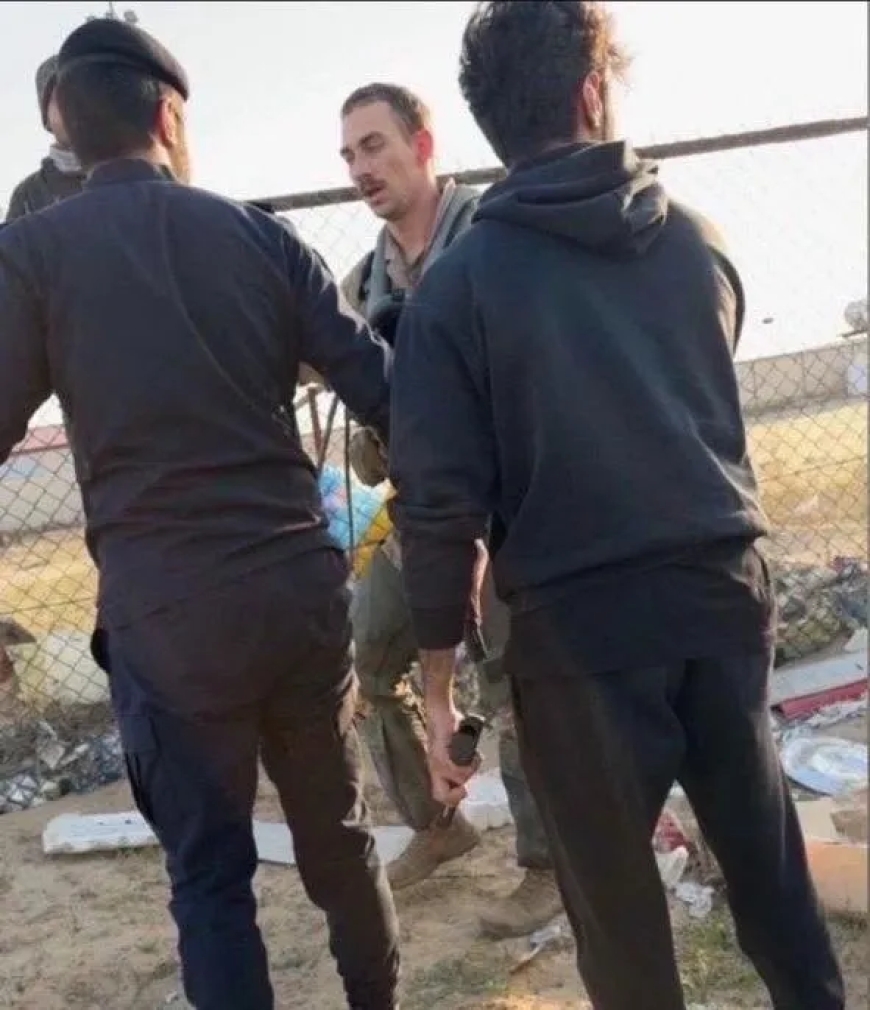
One pilot is approached by men with guns
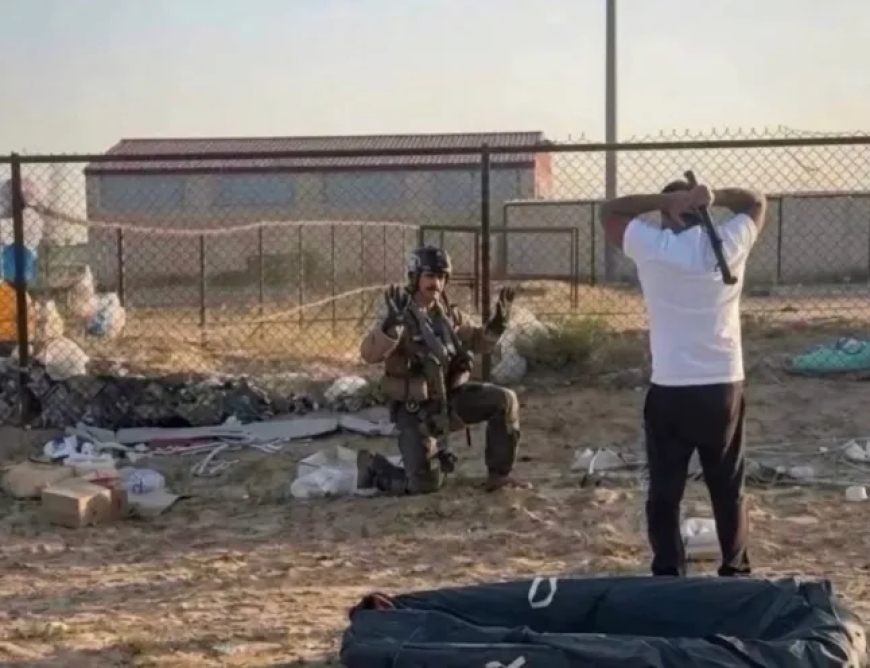
Kuwaiti man armed with a metal pipe confronts what he thinks is a shot down Iranian pilot, before realising he has an American pilot in front of him
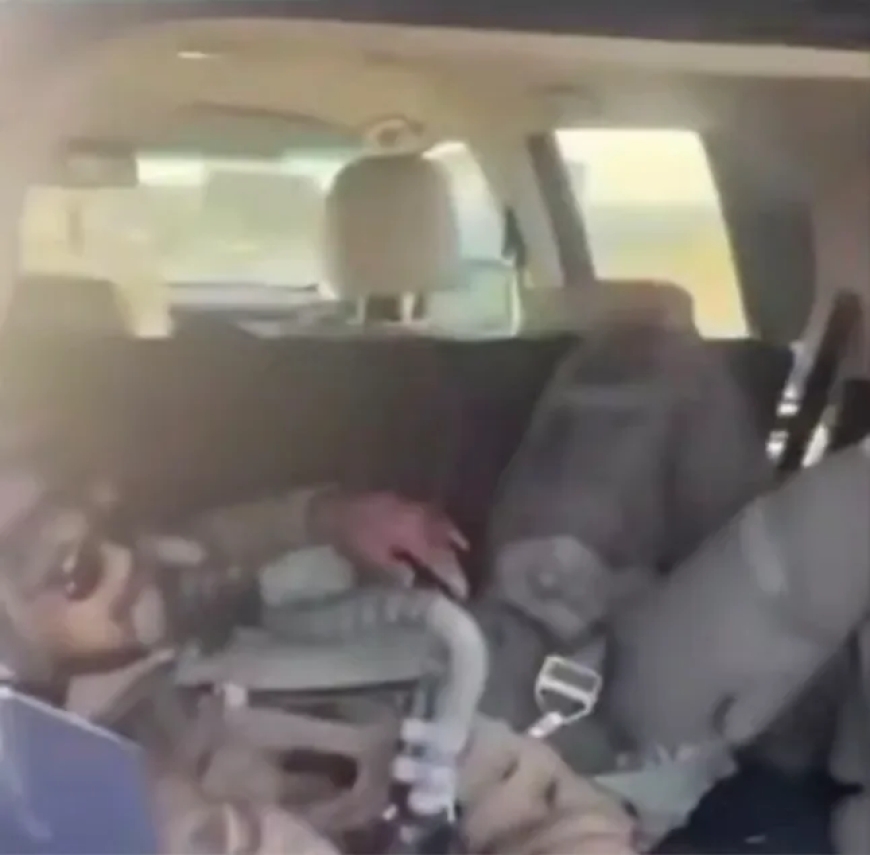
US F-15 crashes in Kuwait in suspected friendly fire incident as pilot, pictured, ejects safely (Picture: east2west news)
Another crew member was seen with a severely injured hand before being placed in the trunk of a vehicle and driven away to safety. At one point, the Kuwaitis could be heard debating what to do with him before one man clarified, “He’s an American — leave him.”
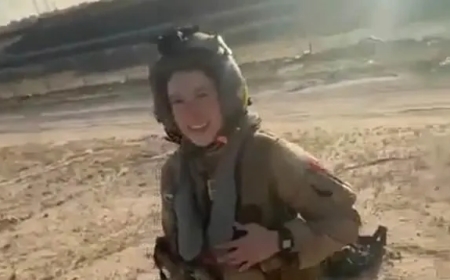
In another scene, a female F-15 crew member stood alone in the desert as a local man approached her.
“You’re fine? Really? Do you need something to help you?” he asked.
She brushed sand from her flight suit and calmly replied, “No, I’m OK.”
The F-15E Strike Eagle — a dual-role fighter capable of reaching speeds just under 2,000 miles per hour — had been operating during an intense wave of Iranian aircraft, missile, and drone attacks when it was shot down.
Iranian state television claimed Iran targeted one of the U.S. planes that later crashed in Kuwait but did not provide further details.
Witness Ahmed al-Asar said he heard explosions and saw one of the aircraft fall from the sky in flames. He rushed to the scene with about a dozen others as an airman descended by parachute.
“At first we thought he was Iranian,” al-Asar said, “but then we realized he was American.”
He reassured the pilot, saying, “No problem, you’re safe… everything’s good.”
It has been reported that U.S. pilots operating in the region carry printed survival messages in multiple local languages. The cards typically read:
“I am an American and I do not speak Arabic, Turkish, Persian, or Kurdish. I will do you no harm.
Please provide me with food, water, shelter, clothing, and medical care.
Help me reach American forces or those of friendly nations.
When you provide my name and this number to U.S. authorities, you will be rewarded for your assistance.”
Escalating Regional Conflict
The shoot-down occurred during a rapidly escalating conflict between the United States and Iran.
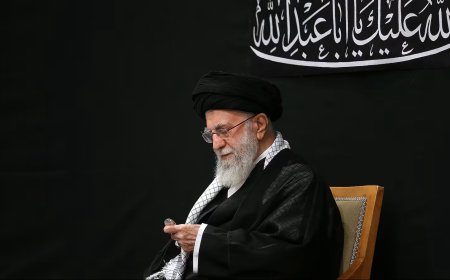
The intensity of the attacks — combined with the killing of Iranian Supreme Leader Ayatollah Ali Khamenei and the absence of a clear exit strategy — has raised fears of a prolonged regional war with global consequences.
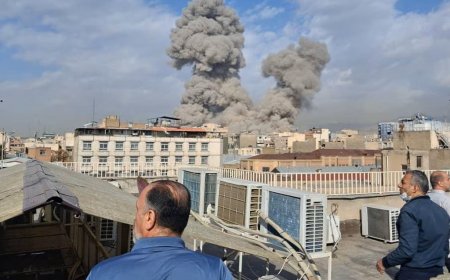
Cities once considered safe havens in the Middle East, including Dubai, have reported incoming fire. Hundreds of thousands of airline passengers remain stranded worldwide as airspace closures ripple across the region. Oil prices have surged, and U.S. allies have pledged support in intercepting Iranian missiles and drones.
President Donald Trump said military operations could last four to five weeks but indicated he is prepared to extend them if necessary.
“I don’t get bored,” Trump said. “There’s nothing boring about this.”
He stated that U.S. forces are focused on destroying Iran’s missile systems, crippling its naval capabilities, preventing it from acquiring nuclear weapons, and halting its support for allied militant groups such as Lebanon’s Hezbollah, which has launched missiles into Israel.
“This was our last, best chance to strike and eliminate the intolerable threats posed by this regime,” Trump said.
Iran has long warned that any direct attack would trigger broader regional retaliation, potentially targeting Israel, Gulf Arab states, and global oil shipping routes critical to energy markets.
Trump added that U.S. projections estimated it would take four weeks to dismantle Iran’s military leadership, but that objective was achieved more quickly than anticipated.
“We’re ahead of schedule there,” he said.
Growing Casualties
As the fighting continues, casualties are mounting on all sides.
The Iranian Red Crescent Society reported that at least 555 people have been killed in the joint U.S.-Israeli operation.
Four American troops have also been killed. Additional fatalities have been reported in the United Arab Emirates, Kuwait, and Bahrain.
Over the weekend, an Iranian drone strike hit a hotel in Manama, the capital of Bahrain, injuring two Department of Defense employees, according to a State Department diplomatic cable obtained by The Washington Post.
Despite the chaos and rising tensions, one message stood out from the desert rescue:
“Thank you for helping us.”
What's Your Reaction?
 Like
0
Like
0
 Dislike
0
Dislike
0
 Love
0
Love
0
 Funny
0
Funny
0
 Angry
0
Angry
0
 Sad
0
Sad
0
 Wow
0
Wow
0