

















Ed Koch dead: Former New York City mayor dies aged 88

Former New York Mayor Ed Koch, the combative, acid-tongued politician who rescued the city from near-financial ruin died today at the age of 88.
Koch passed away at 2 a.m. at New York-Presbyterian/Columbia hospital, his spokesman George Arzt said. His funeral will be held on Monday at Temple Emanu-El in Manhattan.
He was admitted to the hospital on Monday with shortness of breath and was moved to intensive care yesterday for closer monitoring of the fluid in his lungs and legs.
Koch, who served as mayor between 1978 and 1989, had been released last week after being treated for water in his lungs and legs having initially been admitted on January 19.
After leaving City Hall in January 1990, Koch battled assorted health problems and heart disease.
Mayor Bloomberg led the tributes for 'a great mayor, a great man, and a great friend'.
'In elected office and as a private citizen, he was our most tireless, fearless, and guileless civic crusader,' he said.
'Through his tough, determined leadership and responsible fiscal stewardship, Ed helped lift the city out of its darkest days and set it on course for an incredible comeback. We will miss him dearly.'
When Koch took over the city from accountant Abe Beame in 1978, reporters covered him around the clock because of 'the Koch factor' - his ability to say something outrageous any place, any time.

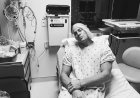
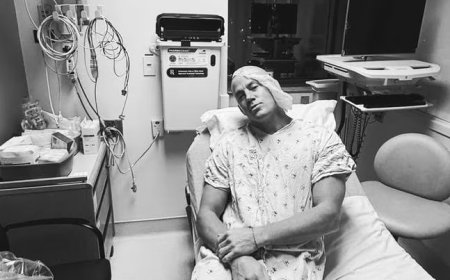
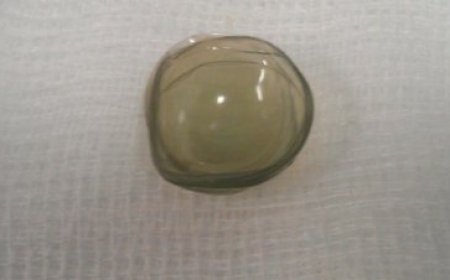
Rough winter: Koch was admitted to the hospital in September for anemia, December for fluid in his lungs (pictured) and twice this month for continuing respiratory problems
The larger-than-life character, who breezed through the streets of New York flashing his signature thumbs-up sign, won a national reputation with his feisty style.
'How'm I doing?' was his trademark question to constituents, although the answer mattered little to Koch. The mayor always thought he was doing wonderfully.
Bald and bombastic, paunchy and pretentious, the city's 105th mayor was quick with a friendly quip and equally fast with a cutting remark for his political enemies.
'You punch me, I punch back,' Koch once memorably observed. 'I do not believe it's good for one's self-respect to be a punching bag.'

How'm I doing? Koch was Mayor of New York City for three terms from 1978 to 1989

Involved: Koch greets a commuter who walked across the Brooklyn Bridge during a transit strike in 1980
The mayor dismissed his critics as 'wackos,' waged verbal war with developer Donald Trump ('piggy') and mayoral successor Rudolph Giuliani ('nasty man'), lambasted the Reverend Jesse Jackson and once reduced the head of the City Council to tears.
'I'm not the type to get ulcers,' he wrote in 'Mayor,' his autobiography. 'I give them.'
Koch became the face and noise of New York, appearing on talk shows and playing himself in movies, including 'The Muppets Take Manhattan' and 'The First Wives Club'.
When President George W. Bush ran for re-election in 2004, Koch, a Democrat, crossed party lines to support him and spoke at the GOP convention.
He also endorsed Mayor Michael Bloomberg's re-election efforts at a time when Bloomberg was a Republican. Koch described himself as 'a liberal with sanity.'
He was also an outspoken supporter of Israel, willing to criticize anyone, including President Barack Obama, over decisions Koch thought could indicate any wavering of support for that nation.
In a WLIW television program, The Jews of New York, Koch spoke of his attachment to his faith.
'Jews have always thought that having someone elevated with his head above the grass was not good for the Jews. I never felt that way,' he said. 'I believe that you have to stand up.'
Koch, who was a lifelong bachelor, was also a champion of gay rights and took on the Roman Catholic Church and scores of political leaders in the issue.
To questions about his own sexuality, he was offered a typically blunt response: 'My answer to questions on this subject is simply, "F*** off". There have to be some private matters left.'

Face and voice of New York: Koch soon became known for his outspoken approach to politics

Popular: Koch, pictured in 1977, was then the only Mayor to secure three terms in office
THE MOUTHY MAYOR: ED KOCH'S MOST QUOTABLE MOMENTS
'I'm not the type to get ulcers, I give them'
'If you agree with me on nine out of 12 issues, you should vote for me. If you agree with me on 12 out of 12 issues, you should see a psychiatrist'
'You punch me, I punch back. I do not believe it's good for ones self-respect to be a punching bag'
Responding to a supporter who asked if he would run again after being beaten in 1989: 'The people have spoken... and they must be punished.'
'The best way to lose weight is to close your mouth - something very difficult for a politician. Or watch your food - just watch it, don't eat it'
'To be a New Yorker you have to live here for six months, and if at the end of the six months you find you walk faster, talk faster, think faster, you're a New Yorker'
'There was always a love-hate relationship with New York in the rest of the country, but I made them feel more love than hate'
'I wake up every moing and say to myself, "Well, I’m still in New York. Thank you, God"'
Under his watch from 1978-89, the city climbed out of near-financial ruin thanks to Koch's tough fiscal policies and razor-sharp budget cuts, and subway service improved enormously.
But homelessness and AIDS soared through the 1980s, and critics charged that City Hall's responses were too little, too late.
Koch was bo in the Bronx on December 12, 1924, the second of three children of Polish immigrants Louis and Joyce Koch. During the Great Depression, the family lived in Newark, New Jersey.
The future mayor worked his way through school, checking hats, working behind a delicatessen counter and selling shoes. He attended City College and served as a combat infantryman in Europe during World War II, eaing his sergeant stripes.
He received a law degree from New York University in 1948 and began practicing law in Manhattan's Greenwich Village neighborhood, where his political career began as a member of the Village Independent Democrats, a group of liberal reformers.
He defeated powerful Democratic leader Carmine DeSapio, whose roots reached back to the corrupt Tammany Hall political machine, in a race for district leader.
Koch was elected to the City Council and then to Congress, serving from 1969-77 as representative for the 'Silk Stocking' district that was then known for its millionaire Park Avenue constituency.
Koch defeated incumbent Beame and future Gov. Mario Cuomo in the Democratic primary to win his first term in City Hall.

Powerful: Koch, right, with (from left) architect Philip Johnson, Jackie Kennedy and Bess Myerson as they leave Grand Central after a conference for the Committee to Save Grand Central Station in January 1975

Influential: He is pictured chatting with President Jimmy Carter and former Rep. Bella Abzug of New York during a meeting in the Oval Office in Washington In February 1978

Figurehead: In October 1980, Koch escorts Republican presidential nominee Ronald Reagan in New York
He breezed to re-election in both 1981 and 1985, winning an unprecedented three-quarters of the votes cast. At the time, he was only the third mayor in city history to be elected to three terms.
Early in his second term, Koch flip-flopped on his pledge to remain at City Hall and decided to run for goveor against then-Lt. Gov. Mario Cuomo. But his 1982 gubeatorial bid blew up after Koch mouthed off about life outside his hometown.
'Have you ever lived in the suburbs?' Koch told an interviewer who asked about a possible move to Albany. 'It's sterile. It's nothing. It's wasting your life.'
It cost him the race, but it convinced many of the eight million city residents that Koch belonged in New York. Meanwhile, Cuomo went on to serve three terms as goveor.
Koch's third term was beset by corruption scandals and Koch suffered a minor stroke in 1987.

Affection: Koch, who never married, is pictured kissing Diana Ross on the steps of City Hall in July 1983

Joker: Koch, who was in City Hall until 1989, gives a lift to Broadway dancer Ann Reinking during performance of political satire on at the New York Press Club in March 1987
The administration was also beset by racial unrest, first after the 1986 death of a black youth at the hands of a white gang in Howard Beach and three years later after a black teen was shot to death in Brooklyn's tough Bensonhurst neighborhood by a group of whites.
Six weeks after the second slaying, Koch lost the Democratic primary to the city's eventual first black mayor, David Dinkins. Koch later said the simmering racial tensions didn't lead to his defeat.
'I was defeated because of longevity,' Koch said. 'People get tired of you. So they decided to throw me out.'
Looking back, Koch said in a 1997 interview: 'All I could think of was, 'Free at last, free at last, great God almighty, I'm free at last".'
Koch said in a 2009 interview with The New York Times that he had few regrets about his time in office but still felt guilt over a decision he made as mayor to close Sydenham Hospital in Harlem.

Outspoken: Koch speaks at the first day of the Republican National Convention in New York in 2004. When George W. Bush ran for re-election, Koch crossed party lines to support him
The move saved $9 million, but Koch said in 2009 that it was wrong 'because black doctors couldn't get into other hospitals' at the time.
'That was uncaring of me,' he said. 'They helped elect me, and then in my zeal to do the right thing, I did something now that I regret.'
Among his favorite moments as mayor was the day in 1980 when, seized by inspiration, he walked down to the Brooklyn Bridge during a rare transit strike and began yelling encouragement to commuters walking to work.
'I began to yell, "Walk over the bridge! Walk over the bridge! We're not going to let these b******* bring us to our knees!" And people began to applaud,' he recalled at a 2012 forum.
After leaving office, Koch continued to offer his opinions as a political pundit, movie reviewer, food critic and judge on 'The People's Court.'

Enduring legacy: He introduces current Mayor Michael Bloomberg in New York in March 2009

Quite the club: Koch sits with former Mayor David Dinkins and Mayor Bloomberg at the US Open in 2003

Fighters: Congressman Charles Rangel, Dinkins and Koch wave during the Veteran's Day Parade last year
Koch remained a political force in Albany well into old age.
He secured a promise in 2010 from then-aspiring Gov. Andrew Cuomo and a number of state legislators to protect the electoral redistricting process from partisanship - and then vocally protested when Cuomo and others reneged on that pledge two years later.
Even in his 80s, Koch still exercised regularly and worked as a lawyer for the firm Bryan Cave.
But he had been in and out of hospital with various serious ailments. In early 2001, he was hospitalized with pneumonia, then he had a pacemaker inserted in 1991 and was hospitalized eight years later with a heart attack.
He had undergone surgery in June 2009 to replace his aortic valve and had gallbladder surgery a month later. and was in the hospital twice in 2012, for anemia in September and then for a respiratory infection in December. He retued twice in January 2013 with fluid buildup in his lungs.

Loss: Koch, pictured in 2008, will be buried in Manhattan in a plot he bought five years ago
At his 80th birthday bash, Bloomberg said Koch was 'not only a great mayor and a great source of advice and support to other mayors, he happens to be one of the greatest leaders and politicians in the history of our city.'
At age 83, Koch paid $20,000 for a burial plot at Trinity Church Cemetery, at the time the only graveyard in Manhattan that still had space.
Not long after buying the plot, he had his tombstone inscribed and installed.
The marker features the last words of slain Wall Street Joual reporter Daniel Pearl: 'My father is Jewish, my mother is Jewish, I am Jewish.'
Koch said he had been moved that Pearl chose to affirm his faith and heritage in his last moments.
'I don't want to leave Manhattan, even when I'm gone,' Koch told The Associated Press of the burial plot. 'This is my home. The thought of having to go to New Jersey was so distressing to me.'
What's Your Reaction?
 Like
0
Like
0
 Dislike
0
Dislike
0
 Love
0
Love
0
 Funny
0
Funny
0
 Angry
0
Angry
0
 Sad
0
Sad
0
 Wow
0
Wow
0