
































John Tyner's Airport Body Scan Protest Becomes Internet Hit (Video)

Cell phone footage of a U.S. man refusing to undergo a full-body scan at an inteational airport attracted more than 210,000 YouTube viewings Monday as the debate continued about whether new high-tech scanners at airports are a violation of privacy and harmful.
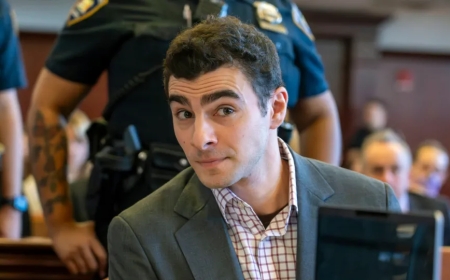
John Tyner, 31, a software programmer, was thrown out of San Diego Inteational Airport on Saturday moing when he told staff he did not want to go through with the check.
Writing on his website hours after the incident, he described how he was pulled from a queue of people to be scanned.
He refused, and was then told he would be subjected to a pat-down security check instead: "You touch my junk and I'm going to have you arrested," he replied to the security official.
Several other security officials then arrived, and eventually Tyner was escorted from the airport without catching his flight to Dakota.
After security officials escorted him from the airport's secure area, he said he was then threatened with a $10,000 fine if he refused to retu to complete the body check.
His story has gaered much support online from the increasing numbers of airline passengers and civil liberties groups who are conceed about the new high-tech body scanners, which they argue are a violation of people's privacy and potentially harmful to their health.
The Transportation Security Administration (TSA) began rolling out the scanners, which were funded by federal stimulus funds, last month.
The machines allow security officials to see beneath a passenger's clothing by using a low dose of radiation to create a computerized image of the person's body.
Officials now perform "enhanced" pat-downs on airline passengers who opt against the body scanner, or who set off a metal detector. These searches require security officials to touch passengers' breasts and genital area.
Writing in USA Today on Monday, the U.S. Homeland Security Secretary, Janet Napolitano, defended the security measures.
"Each and every one of the security measures we implement serves an important goal," Napolitano wrote.
She added that the scanning machines were "safe, efficient and protect passenger privacy," and that "pat-downs have long been one of the many security measures used by the U.S. and [other] countries."
Watch the clip.
What's Your Reaction?
 Like
0
Like
0
 Dislike
0
Dislike
0
 Love
0
Love
0
 Funny
0
Funny
0
 Angry
0
Angry
0
 Sad
0
Sad
0
 Wow
0
Wow
0